Sodium Chlorite Water Purification is a widely used method in modern water treatment systems, particularly for generating chlorine dioxide, one of the most effective disinfectants available today. While sodium chlorite itself is not a direct disinfectant, it plays a critical role in producing chlorine dioxide for water disinfection, municipal treatment, and industrial sanitation.
This guide explains how sodium chlorite works, its safety considerations, and why it is increasingly preferred over traditional chlorine-based systems.
What Is Sodium Chlorite in Water Purification?
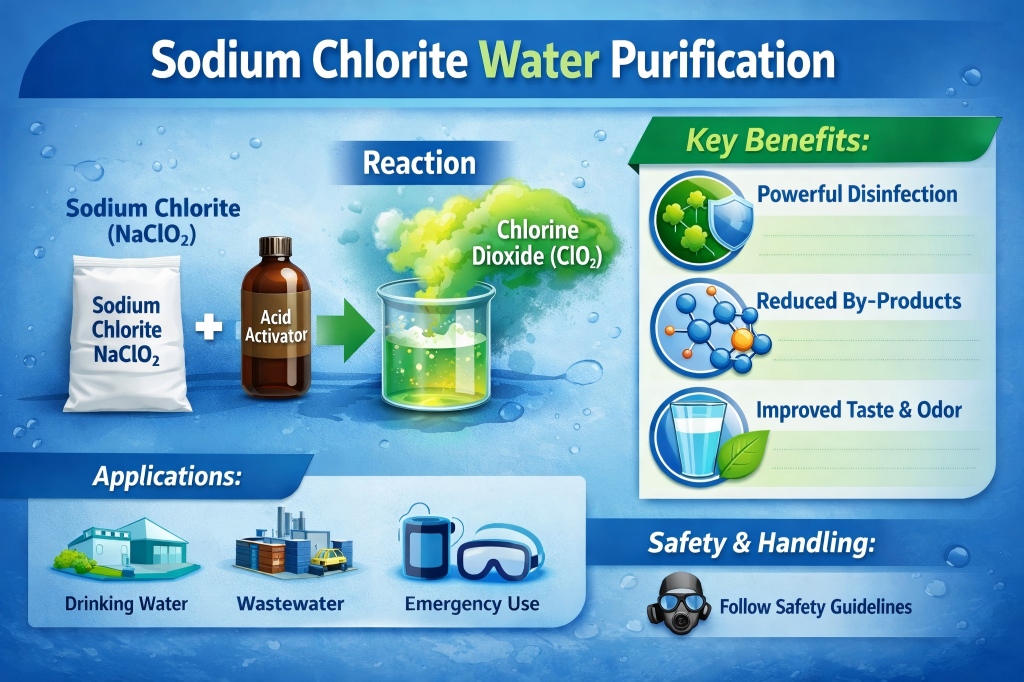
Sodium chlorite (NaClO₂) is a stable chemical compound primarily used in sodium chlorite water treatment systems as a precursor to chlorine dioxide.
It becomes active only after undergoing a chemical reaction—typically with an acid—to generate chlorine dioxide, which is responsible for the actual disinfection process.
How Sodium Chlorite Works in Water Purification
The Process: From Sodium Chlorite to Chlorine Dioxide
The effectiveness of chlorine dioxide water purification depends on the controlled conversion of sodium chlorite.
Step-by-step process:
- Sodium chlorite is mixed with an acid (commonly hydrochloric acid)
- A chemical reaction occurs
- Chlorine dioxide (ClO₂) is generated
- The solution is applied to water for disinfection
This method allows for on-site generation, eliminating the need to transport unstable chlorine dioxide gas.
Benefits of Sodium Chlorite Water Purification
1. Powerful Water Disinfection
Chlorine dioxide generated from sodium chlorite is highly effective against:
- Bacteria
- Viruses
- Protozoa (e.g., Giardia, Cryptosporidium)
- Biofilms
This makes it a superior solution for water disinfection across various industries.
2. Broad-Spectrum Antimicrobial Activity
Unlike traditional chlorine, chlorine dioxide works across a wide pH range and remains effective in complex water conditions.
3. Reduced Disinfection By-Products
Compared to chlorine, chlorine dioxide water purification produces significantly fewer harmful disinfection by-products (DBPs), such as:
- Trihalomethanes (THMs)
- Haloacetic acids (HAAs)
4. Taste and Odor Control
Chlorine dioxide effectively removes:
- Organic odors
- Algae-related taste issues
- Sulfur compounds
5. Stable Storage and On-Demand Use
Sodium chlorite is:
- Stable during storage
- Easy to transport
- Ideal for on-site chlorine dioxide generation
Applications of Sodium Chlorite in Water Treatment
Municipal Drinking Water Treatment
- Disinfection of potable water
- Control of pathogens resistant to chlorine
- Reduction of DBP formation
Industrial Water Treatment
- Cooling tower disinfection
- Process water purification
- Biofilm and Legionella control
Wastewater Treatment
- Effluent disinfection
- Odor control (e.g., hydrogen sulfide removal)
Healthcare & Facilities
- Water system sanitation
- Legionella control in hot water systems
Emergency Water Purification
- Portable water treatment systems
- Disaster relief and remote applications
Sodium Chlorite Dosage for Water Treatment
The correct sodium chlorite dosage for water treatment depends on:
- Water quality (turbidity, organic load)
- Target microorganisms
- Required chlorine dioxide concentration
⚠️ Important:
Dosage must always follow technical guidelines and regulatory standards to ensure safe and effective disinfection.
Safety Considerations
Is Sodium Chlorite Safe for Municipal Water Treatment?
Yes—when properly handled and applied, sodium chlorite is safe and widely approved for municipal water systems.
However, key precautions include:
- Use controlled generation systems
- Avoid direct exposure to concentrated chemicals
- Ensure proper ventilation during chlorine dioxide generation
- Follow MSDS and regulatory guidelines
Chlorine dioxide must be used in controlled concentrations to ensure safety.
Sodium Chlorite vs. Chlorine for Water Disinfection
| Feature | Sodium Chlorite (ClO₂ System) | Chlorine |
|---|---|---|
| Disinfection Power | High | Moderate |
| By-Products | Low | Higher (THMs, HAAs) |
| Effectiveness vs Protozoa | Excellent | Limited |
| Taste & Odor Control | Strong | Moderate |
| Stability | Requires generation | Stable |
Conclusion:
Systems based on sodium chlorite and chlorine dioxide offer better performance and safety in modern water treatment compared to traditional chlorine systems.
How to Use Sodium Chlorite for Drinking Water Purification
For sodium chlorite for drinking water treatment, the process involves:
- Preparing the correct sodium chlorite solution
- Activating it with an acid to generate chlorine dioxide
- Applying the solution to water at the recommended dosage
- Allowing sufficient contact time for disinfection
⚠️ Always follow professional guidelines and approved systems when treating drinking water.
Conclusion
Sodium Chlorite Water Purification is a highly effective and modern approach to water disinfection. By enabling the on-site generation of chlorine dioxide, it provides:
- Superior microbial control
- Reduced harmful by-products
- Flexible application across industries
As global demand for safe and efficient water treatment grows, sodium chlorite-based systems continue to play a key role in delivering reliable and high-performance disinfection solutions.
At Huiya Envirotech, we provide high-purity sodium chlorite and advanced activation systems to ensure your water treatment processes meet the highest safety and efficiency standards.