
Chlorine dioxide (ClO₂) is widely used in water treatment, sanitation, food processing, and industrial disinfection. However, many people still ask: is chlorine dioxide safe?
The answer depends on concentration, application method, and proper handling. When used correctly and within regulated limits, chlorine dioxide is considered a safe and highly effective disinfectant for municipal and industrial applications.
This article explains the fundamentals of ClO₂ chemistry, the role of sodium chlorite in chlorine dioxide generation, and the key safety considerations users should understand.
Chlorine dioxide is a powerful greenish-yellow gas used as an oxidizing disinfectant. Unlike traditional chlorine, which disinfects through chlorination, chlorine dioxide works mainly through oxidation, allowing it to destroy harmful microorganisms efficiently.
Because of its strong antimicrobial activity and reduced formation of harmful chlorinated by-products, chlorine dioxide is widely used in modern water treatment systems.

At the core of ClO₂ chemistry is oxidation. When chlorine dioxide is introduced into water, it reacts rapidly with bacteria, viruses, fungi, and other microorganisms, neutralizing them effectively.
Compared to traditional chlorine disinfectants, chlorine dioxide offers several advantages:
Because chlorine dioxide is unstable at high concentrations, it is typically generated on-site instead of transported as a compressed gas.
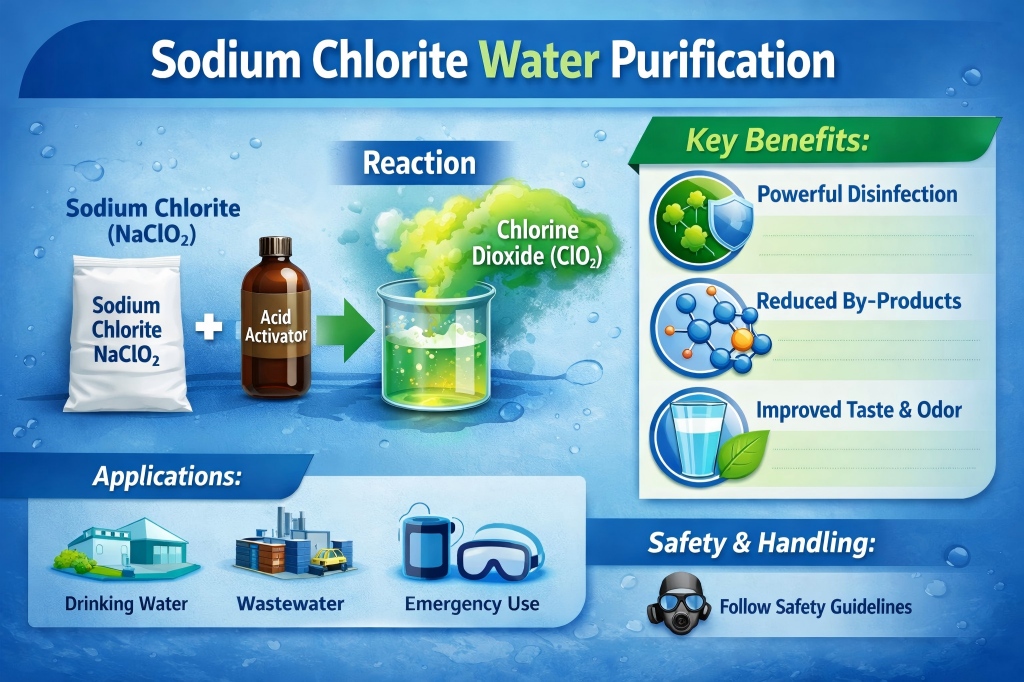
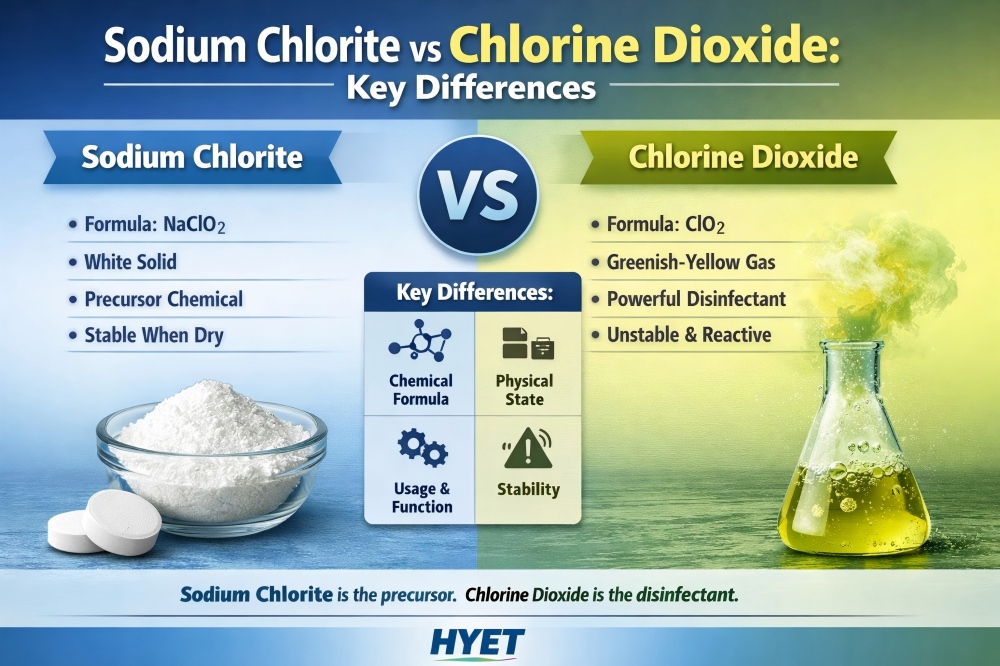
Chlorine dioxide is commonly produced using sodium chlorite (NaClO₂) as a precursor chemical.
Sodium chlorite is a stable, white inorganic salt used to generate chlorine dioxide through controlled chemical activation.
It is important to understand that sodium chlorite itself is not usually applied directly as a disinfectant. Instead, it is converted into chlorine dioxide for use in water treatment and sanitation systems.
Understanding sodium chlorite safety is essential for proper chemical handling.
As a strong oxidizing agent, sodium chlorite should always be handled according to professional safety procedures.
When properly stored and managed, sodium chlorite can be used safely in industrial and municipal systems.

The safety of chlorine dioxide depends largely on dosage, concentration, and application method.
Regulatory authorities such as the U.S. Environmental Protection Agency (EPA) recognize chlorine dioxide as a safe drinking water disinfectant when used within approved limits.
At regulated levels, chlorine dioxide effectively controls waterborne pathogens while remaining safe for public water systems.
Many countries also approve chlorine dioxide for:
Although chlorine dioxide is safe when professionally controlled, misuse can be dangerous.
Potential Risks Include
Claims promoting chlorine dioxide as an unapproved medical treatment are scientifically unsupported and potentially hazardous.
⚠️ Chlorine dioxide should never be consumed or used outside approved industrial, sanitation, or water treatment applications.
|
Feature |
Chlorine Dioxide |
Traditional Chlorine |
|
Disinfection Strength |
High |
Moderate |
|
Effectiveness Against Biofilm |
Excellent |
Limited |
|
THM Formation |
Lower |
Higher |
|
Taste & Odor Control |
Strong |
Moderate |
|
pH Sensitivity |
Lower |
Higher |
These advantages have contributed to the growing adoption of chlorine dioxide in advanced water treatment systems.
To ensure safety in professional and industrial settings, adhere to the following:
So, is chlorine dioxide safe?
Yes—when generated, handled, and applied correctly, chlorine dioxide is considered a safe and highly effective disinfectant for water treatment and industrial sanitation.
Understanding proper ClO₂ chemistry and following established sodium chlorite safety protocols are essential for safe operation. When used within regulated standards, chlorine dioxide provides powerful microbial control while producing fewer harmful by-products than traditional chlorine systems.
As demand for safer and more efficient water treatment technologies continues to grow, chlorine dioxide remains one of the most trusted modern disinfection solutions available today.

2026/05
Chlorine dioxide (ClO₂) is widely used in water treatment, sanitation, food processing, and industrial disinfection. H……

2026/04
When exploring pool sanitation options, many users come across the term sodium chlorite for pools and wonder whether i……
2026/03
Sodium Chlorite Water Purification is a widely used method in modern water treatment systems, particularly for generat……
2026/02
In industrial disinfection, water treatment, bleaching, and sanitation, sodium chlorite vs chlorine dioxide is a commo……
Get top-quality sodium chlorite and chlorine dioxide products, along with custom solutions. Our expert team is here to help - contact us today!
Contact Us